Skip to content
  • Clear communication
  • Free inspections
Asheville, NC (828) 555-0159
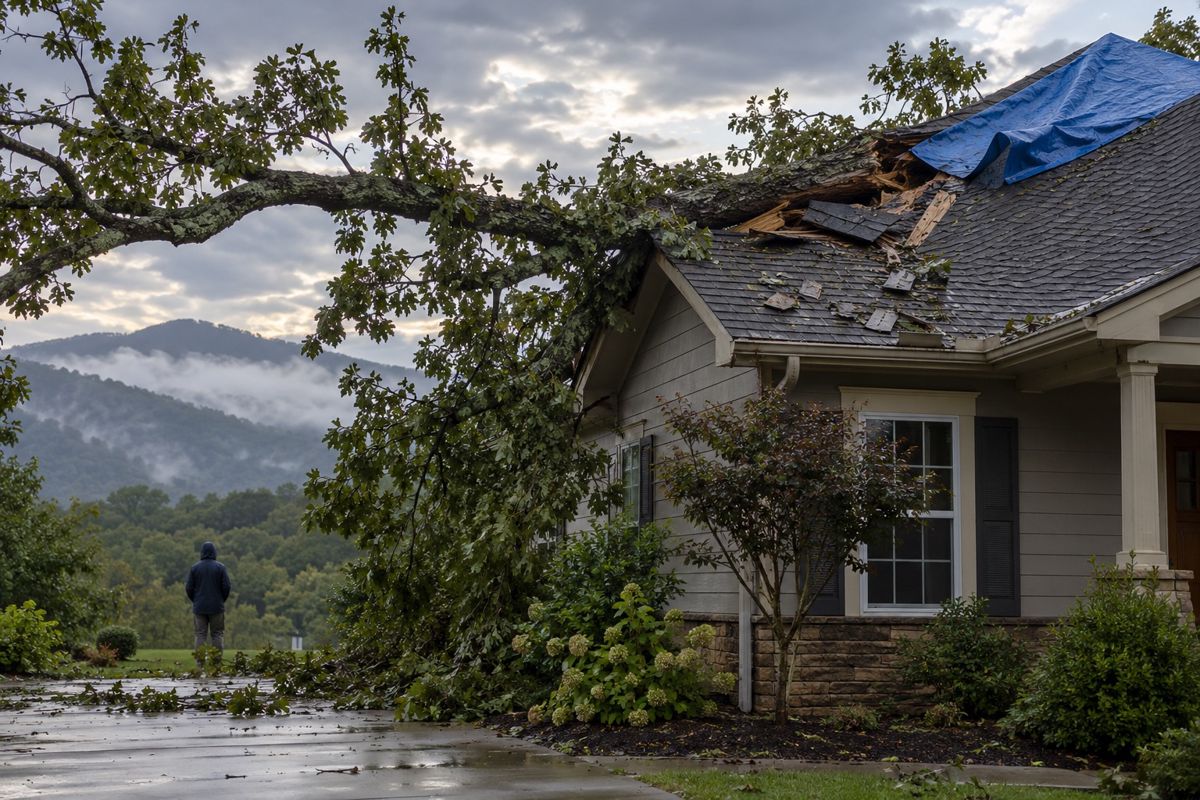
Fallen oak limb on a shingle roof with a blue tarp partly fitted

Storm and hail damage in Asheville, NC

Storm damage roof repair in Asheville after wind, limbs and hail

What to do in the first hours, how temporary protection works and how to approach a claim without being rushed.

  • Safe first steps after a storm
  • Temporary protection explained
  • Straight talk on claims and storm chasers

Step 1 of 3

What do you need?

What kinds of storm damage hit roofs around Asheville?

Storm damage roof repair Asheville owners ask about usually follows one of a few events. Thunderstorms roll over the ridgelines through spring and summer with strong gusts and heavy rain. Hail falls in some storms, though large hail is less common here than on the plains. Winter brings ice and the occasional heavy snow. Tropical systems that move inland can bring days of rain and high wind, and the remnants of Hurricane Helene in September 2024 showed how severe that can be in the mountains, with trees down across the region.

Typical roof damage includes:

  • Shingles lifted, creased or blown off.
  • Limbs or whole trees on the roof.
  • Dents, bruises and granule loss from hail.
  • Damaged flashing, vents, gutters and chimney caps.
  • Water entering through any of these openings.

What should you do first after a storm hits your roof?

Stay calm and work through the list in order.

  1. Put safety first. Do not climb onto a storm-damaged roof. Stay out of rooms with sagging ceilings and keep clear of downed power lines.
  2. Take photos. Photograph the damage from the ground, any fallen limbs and any stains or drips inside. Note the date.
  3. Limit further damage. Move belongings away from leaks and catch drips with buckets.
  4. Arrange temporary protection. Tarps or boards over exposed areas should be fitted by a roofer, not by you on a wet roof.
  5. Contact your insurer. Report the loss and ask what they need. Keep receipts for any emergency work.
  6. Get a written assessment. Ask for a description of the damage and the proposed repair before you sign anything.

For smaller problems that are not storm related, see roof repair.

How does temporary roof protection work?

When a storm opens up a roof, the first goal is to keep more water out. Temporary protection usually means heavy tarps secured over the damaged area, often held down by wooden battens rather than loose nails through the tarp, or boards over a hole where a limb came through.

It is a stopgap, not a repair. Tarps can loosen in wind and sunlight wears them down, so permanent work needs to follow. Keep these points in mind:

  • Take photos before and after the tarp goes on.
  • Keep the invoice, since insurers often ask for it.
  • Be careful about paying a large deposit for temporary work.
  • Ask how long the temporary cover is expected to last.

If trees are on the roof, the limb removal may be a separate job for a tree service, and a roofer can then assess what is underneath.

Policies differ, so read yours. Wind and hail damage is often covered, subject to a deductible, and some policies set a separate deductible for wind or hail. Ordinary wear and age are usually not covered. The insurance adjuster decides coverage. A roofer can describe the damage and provide an estimate, but the roofer does not decide what the insurer pays.

After big storms, out-of-area crews often arrive and go door to door. Be careful with anyone who:

  • Asks for a large payment before any work starts.
  • Offers to cover or waive your deductible. In many states this is against the law, and it is always a warning sign.
  • Pressures you to sign a contract or hand over your claim on the spot.
  • Cannot give a local address or proof of license and insurance.

Take your time. A genuine repair will still be there tomorrow.

How long does storm repair take, and when should you call?

Timing depends on the damage, the weather and the insurance process. Temporary protection can be put up quickly in some cases, but after a widespread storm demand rises and crews and materials can be stretched. Permanent repairs often wait for the insurer to approve the scope, and shingle or metal supply can add days.

Call as soon as you see any of these:

  • Missing or creased shingles.
  • A tree or large limb on the roof.
  • Water coming in or a new ceiling stain.
  • Dented vents, gutters or soft metal after hail.

If the damage turns out to cover whole slopes, the answer may be a roof replacement. Visit the home page for the full list of services.

Clear communication
Free inspections
Written estimates
Local crew

Request storm and hail damage

Tell us what you need and we call you back.

Step 1 of 3

What do you need?

No obligation.

Questions about roofing in Asheville

How do I know if my roof has hail damage?

From the ground you may see dented gutters, vents or metal flashing. On the roof, hail leaves bruised spots, cracked mats and bare patches where granules were knocked off. Damage is often hard to see from below, so a trained inspection is worth it. Keep photos and have the findings in writing before a claim.

Should I climb up to look at the damage myself?

No. Storm-damaged roofs can be slick, weakened or holding loose debris, and falls from roofs cause serious injuries. Look from the ground with binoculars or a phone zoom, and photograph what you can see. Let a roofer inspect the surface safely.

Will my insurance cover storm damage to my roof?

Often it covers wind, hail and falling trees, subject to your deductible and policy terms. Wear, age and lack of maintenance are generally excluded. Report damage promptly, keep photos and receipts, and ask your insurer about your deductible. Coverage is the insurer's decision, so ask them directly.

Can a damaged roof wait until the weekend or next month?

Water gets in quickly, and delays can turn a small repair into soaked insulation and ceiling damage. Temporary protection over exposed areas is worth arranging soon, even if the permanent repair has to wait for the insurer or for materials.

How can I spot a storm chaser?

Warning signs include door knocking right after a storm, demands for a large deposit, no local address, pressure to sign immediately and offers to absorb your deductible. Ask for the contractor license and insurance, verify both, and get a written scope. A local company will still be around when you need follow-up work.

How it works

  1. Call or request a quote

    Tell us what is happening with the roof.

  2. Free inspection

    A roofer checks the roof and gives a written price.

  3. Work done right

    Clean crew, nail sweep, warranty in writing.

Ready when you are

Call now or request a quote online.

(828) 555-0159