Skip to content
  • Clear communication
  • Free inspections
Asheville, NC (828) 555-0159
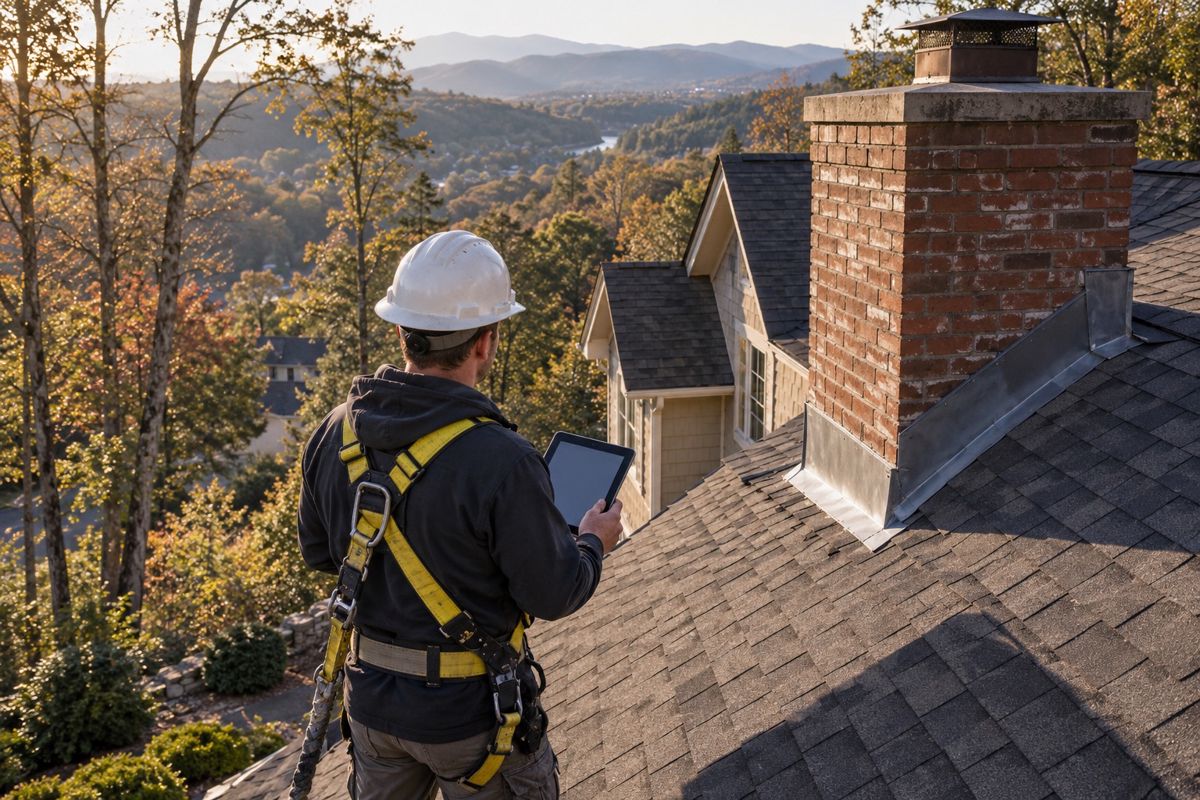
Inspector from behind checking chimney flashing on a shingle roof

Roof inspection in Asheville, NC

Roof inspection in Asheville before you buy, sell or file a claim

A close look at the surface, flashing and attic tells you what condition the roof is in and what to expect next.

  • Surface, flashing, vents and attic reviewed
  • Photos and a written summary
  • Useful for buyers, sellers and insurance

What does a roof inspection cover?

A roof inspection Asheville owners can rely on goes beyond a quick glance from the yard. It looks at the whole roof system, inside and out.

  • Roof surface. Shingles or panels, checking for curling, cracking, granule loss, lifted edges and missing pieces.
  • Flashing. Metal at chimneys, walls, skylights, dormers and valleys.
  • Penetrations. Plumbing vents, exhaust fans, chimney caps and satellite mounts.
  • Gutters and drainage. Whether water leaves the roof edge cleanly and moves away from the foundation.
  • Attic. Ventilation, insulation, damp or stained decking, daylight where it should not be, and signs of mold.
  • Interior ceilings. Stains and cracks that point to past or present leaks.
  • Past repairs. Patches and sealant that hint at recurring trouble.

A good inspection ends with photos and a written summary, not just a verbal opinion.

When should you get a roof inspection in Asheville?

Certain moments make an inspection especially worthwhile.

  • Buying a home. A roof near the end of its life can be a bargaining point or a reason to walk away.
  • Selling a home. Knowing the condition up front avoids surprises during the buyer's own inspection.
  • After a storm. Wind, hail and falling limbs can cause damage you cannot see from the ground. See storm damage repair for more.
  • Insurance renewal or claims. Some insurers ask for roof condition information, particularly on older roofs.
  • Mid-life check. Once a roof is past the middle of its expected life, a look every year or two helps you plan.
  • Before a big project. Solar panels, tree removal or a major renovation near the roof are good times to check first.

If you are just curious about how your roof is holding up in a damp mountain climate, that is a fine reason too.

What is a roof certification, and who asks for it?

A roof certification is a written statement from a roofer or inspector about the condition of a roof and, in many cases, how much life they expect it to have left. Buyers, lenders and insurers sometimes ask for one, especially on older homes.

Know what it is and is not.

  • It describes condition on the day of inspection. It is not automatically a warranty.
  • The wording and the time period vary between companies, so read the document.
  • Not every inspector will certify an older roof, and some will state conditions or limits.
  • If you need one for a sale or an insurer, ask first what form they will accept.

If the inspection finds problems, ask for both repair and replacement options in writing. A repair may be enough, or the honest answer may be a full replacement.

Roofs in the mountains face a few extra stresses, and a local inspector pays attention to them.

  • Moss and algae. Common on shaded north slopes under trees, where shingles stay damp.
  • Wind exposure. Ridgeline and hillside homes can see stronger gusts, so lifted tabs along ridges and edges matter.
  • Ice and freeze damage. Signs of ice build-up at the eaves, torn flashing and fasteners worked loose by freeze and thaw.
  • Debris in valleys and gutters. Leaves, limbs and pine needles that trap water.
  • Attic moisture. Poor ventilation lets humid air condense on the underside of the deck.
  • Older home details. Historic and early 1900s houses may have complicated flashing, chimneys and mixed materials.

These checks are why a local look is worth more than a generic checklist.

What affects the cost, how long does it take and when should you call?

Inspection fees depend on the size and pitch of the roof, how easy it is to reach, whether the attic can be entered, how detailed the report needs to be and whether a certification letter is requested. Many inspections of an ordinary home take an hour or two on site, with the written report following.

One honest point: a roofer who inspects may also hope to sell you the repair. That is not a reason to avoid a roofer, but it is a good reason to ask for photos of every problem, a clear written scope and a second opinion on any large job.

Call before you buy or sell, after a storm, when a stain appears or when your roof is getting older and you want to plan ahead. The home page lists the other services if the inspection leads to work.

Clear communication
Free inspections
Written estimates
Local crew

Request roof inspection

Tell us what you need and we call you back.

Step 1 of 3

What do you need?

No obligation.

Questions about roofing in Asheville

How long does a roof inspection take?

For an ordinary home, the on-site inspection often takes an hour or two, depending on roof size, pitch, access and the attic. Complex rooflines and older homes can take longer. The written report with photos usually follows afterwards, and timing varies by company.

Is a roof inspection different from a home inspection?

Yes. A general home inspector looks at many systems and usually spends limited time on the roof, sometimes from the ground. A roof inspection focuses on the surface, flashing, vents and attic, and gives a deeper view of condition and remaining life. Buyers often use both.

Do I need to be home during the inspection?

Not always, but it helps. The inspector may need access to the attic or interior ceilings, and you can ask questions on the spot. If you are a buyer, your agent can often be present instead. Arrange access in advance so nothing is missed.

Can an inspection tell me how many years are left on my roof?

It can give an informed estimate, but not a promise. Condition, ventilation, weather exposure and past repairs all affect how long a roof lasts. Treat any estimate as a range, and ask the inspector to explain what they based it on.

What should I do with the inspection report?

Keep it. Use it to plan repairs, to negotiate during a home sale or to support an insurance conversation. If it lists repairs, ask for each one to be quoted in writing and consider a second opinion for any large job.

How it works

  1. Call or request a quote

    Tell us what is happening with the roof.

  2. Free inspection

    A roofer checks the roof and gives a written price.

  3. Work done right

    Clean crew, nail sweep, warranty in writing.

Ready when you are

Call now or request a quote online.

(828) 555-0159