Skip to content
  • Clear communication
  • Free inspections
Asheville, NC (828) 555-0159
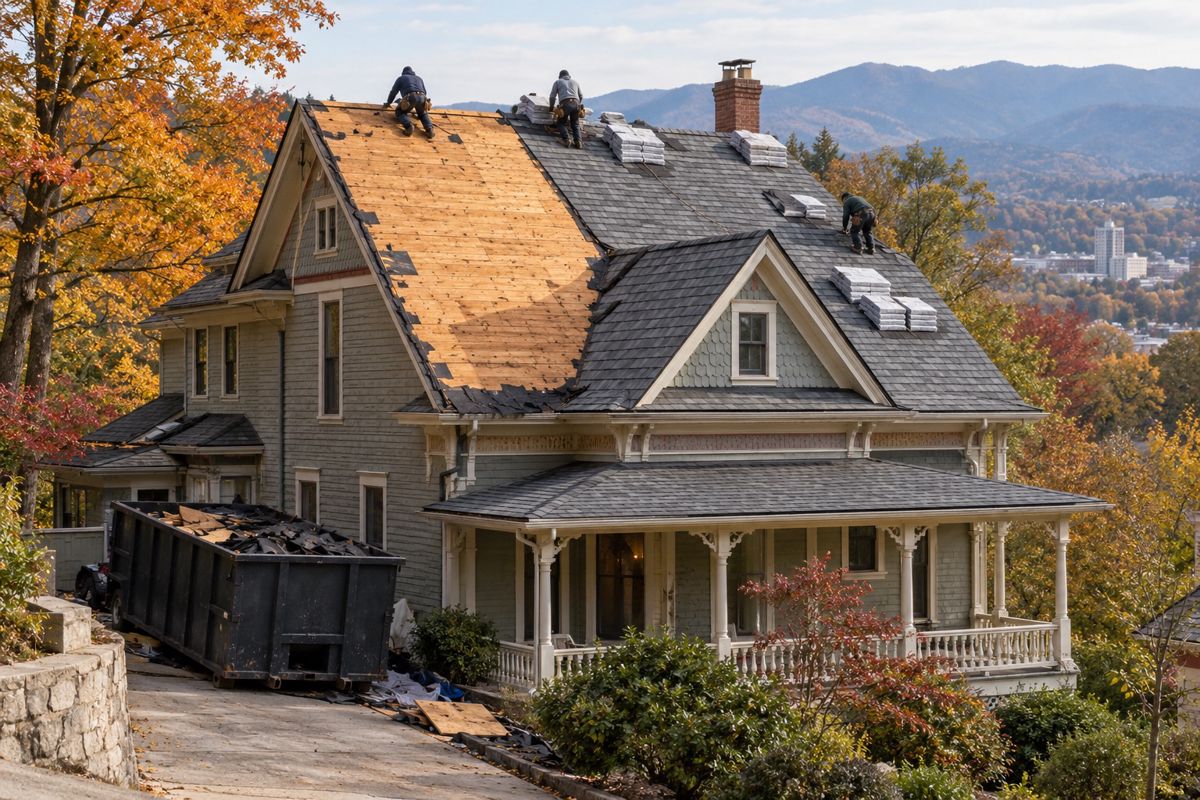
Half-finished roof replacement on a Victorian house with new gray shingles

Roof replacement in Asheville, NC

Roof replacement in Asheville, planned around mountain weather

When repairs stop making sense, a full replacement is the lasting fix. Here is how it works and what to ask.

  • Materials chosen for mountain rain and ice
  • Tear-off, deck check and new flashing explained
  • A written scope you can compare

Step 1 of 3

What do you need?

When does a roof in Asheville need to be replaced?

Roof replacement Asheville homeowners ask about usually starts with a leak, a stain or a roof that looks tired. Age matters, but condition matters more. A roof shaded by hardwoods and kept damp by mountain fog can wear faster than one on an open, sunny slope.

Signs that point toward replacement instead of repair:

  • Shingles that curl, crack or shed granules, so the gutters fill with grit.
  • Leaks in more than one spot, or leaks that come back after a repair.
  • Soft or sagging areas of roof deck that you can see from the ground or feel in the attic.
  • Large patches of moss and algae with the shingle surface wearing away underneath.
  • Storm damage spread across a whole slope. Our page on storm and hail damage covers that situation.

If you are unsure, a roof inspection will show how much life is left in the roof.

What roofing materials work on Asheville homes?

Most Asheville homes carry asphalt shingles, and for good reason. They are widely available, they suit the pitch of most houses and they cost less than many other options. Architectural (laminated) shingles are the usual choice today because they are thicker and handle wind better than older flat three-tab shingles.

Other materials show up around the mountains too.

  • Standing seam metal. Popular on mountain homes and cabins because it sheds rain, snow and leaves quickly. It costs more up front and needs careful installation to deal with expansion and rain noise.
  • Cedar shake. Seen on older and rustic homes. It looks right but needs upkeep in a damp climate.
  • Slate and clay tile. Found on some historic homes. These are heavy and specialist jobs.

Choose with the pitch of the roof, tree cover, budget and the look of the house in mind. If your home is in a local historic district, ask the city before you change the material, because design review rules can apply.

What does a roof replacement involve, step by step?

A full replacement is more than new shingles on top of old ones. A thorough job usually includes these steps.

  1. Protection. Covers over landscaping, siding and outdoor equipment, and a plan for where debris will land.
  2. Tear-off. Old shingles, underlayment and flashing are removed down to the roof deck.
  3. Deck check. Rotted or damaged boards are replaced. In a wet climate this is where surprises appear.
  4. Water protection. Ice and water barrier along the eaves and in valleys, then underlayment across the rest of the roof.
  5. New roofing and flashing. Shingles or metal panels, new flashing at walls, chimneys and skylights, and new pipe boots.
  6. Ventilation. Ridge and soffit vents so the attic can breathe and moisture does not collect.
  7. Cleanup. Sweeping the yard for nails, hauling away old material and a final walk around the property.

Ask for each step to be described in the quote so you can compare like with like.

No honest roofer can name a price without seeing the roof. These are the main things that move the number.

  • Size and pitch. Larger and steeper roofs take more material and more labor, and steep roofs need extra safety equipment.
  • Material. Metal and cedar shake cost more than asphalt shingles.
  • Layers and condition. Extra layers to tear off and rotted decking add work.
  • Roof shape. Many valleys, dormers and skylights mean more flashing and more time. Older Victorian and Craftsman rooflines often fall in this group.
  • Access. Steep driveways and tight hillside lots can make it harder to place a dumpster and stage materials.
  • Extras. Gutter work, new vents, skylight replacement and chimney repairs.

Get at least two written quotes and compare the scope line by line, not just the bottom number. A much lower quote often leaves something out, such as decking repair or proper flashing.

How long does it take, and when should you call?

Many ordinary homes are finished in one to three working days once the crew is on site. Complicated roofs, metal work and bad weather take longer. In the mountains, afternoon thunderstorms and cold mornings can shift the schedule, and a careful crew will not leave a roof open to rain.

Call when you notice a leak, when shingles are failing across the roof or when an inspection tells you the roof is near the end of its life. Planning ahead gives you time to compare quotes instead of choosing in a hurry.

If you only have one problem area, ask whether a roof repair is enough. You can also head back to the home page to see the other services.

Clear communication
Free inspections
Written estimates
Local crew

Request roof replacement

Tell us what you need and we call you back.

Step 1 of 3

What do you need?

No obligation.

Questions about roofing in Asheville

How long does a roof last in Asheville?

Asphalt shingles commonly last somewhere between two and three decades in mild conditions. Roofs that stay damp, sit under heavy shade or take repeated storms often wear out sooner. Metal roofs can last longer. Ventilation, installation quality and regular maintenance matter as much as the material.

Can new shingles go over the old ones?

Some building codes allow a second layer in limited cases, but most roofers prefer a full tear-off. Removing the old roof lets the crew inspect the deck, fix rot and install new flashing properly. Overlaying also adds weight and can hide problems. Ask your roofer to explain the choice and confirm the rule with the local permit office.

Do I need a permit for a roof replacement in Asheville?

Permit rules can apply, and they differ between the City of Asheville and Buncombe County and by type of job. A reliable roofer will tell you whether a permit is needed and who pulls it. You can also call the local permit office to confirm. Historic districts may have extra design review for changes in material or appearance.

Will insurance pay for a new roof?

It depends on the cause. Damage from a covered event such as wind, hail or a fallen tree may be covered, subject to your deductible. Age and ordinary wear usually are not. Read your policy, report storm damage promptly and keep photos. The adjuster decides coverage, not the roofer.

What should I ask before hiring a roofer?

Ask to see their contractor license and proof of insurance, and check both independently. Ask who will do the work, what the written scope includes, how decking problems are priced and how cleanup is handled. Get the details in writing and be wary of pressure to sign on the spot.

How it works

  1. Call or request a quote

    Tell us what is happening with the roof.

  2. Free inspection

    A roofer checks the roof and gives a written price.

  3. Work done right

    Clean crew, nail sweep, warranty in writing.

Ready when you are. Call now or request a quote online.