Skip to content
  • Clear communication
  • Free inspections
Asheville, NC (828) 555-0159
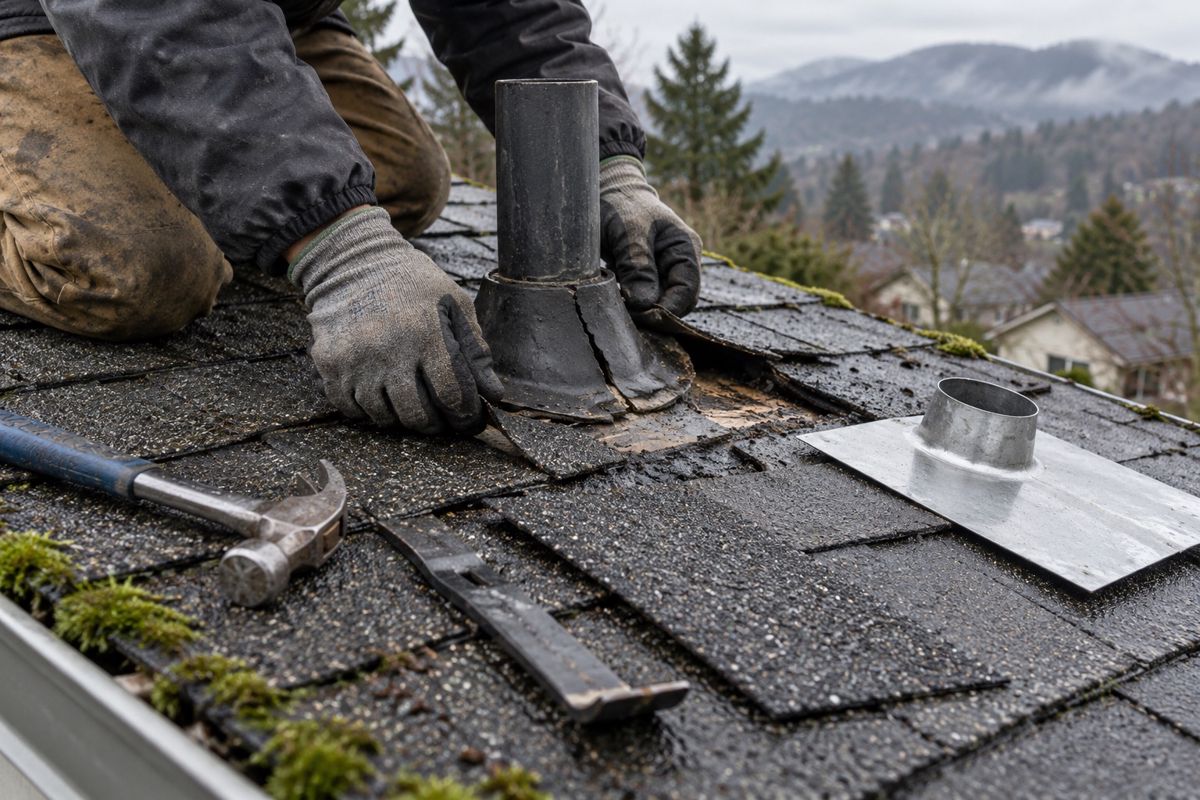
Gloved hands repairing a pipe boot and shingles on a damp roof

Roof repair in Asheville, NC

Roof repair in Asheville that traces the leak to its source

Stains, drips, lifted shingles and failed flashing. Fix the cause, not just the spot you can see.

  • Leaks traced from the attic to the roof surface
  • Flashing, boots, shingles and valleys explained
  • Honest word on repair versus replacement

Step 1 of 3

What do you need?

What causes roof leaks in Asheville homes?

Roof repair Asheville homeowners need most often starts with a small failure that lets water in slowly. In a wet mountain climate, a small gap can soak insulation and decking for weeks before a stain shows up on the ceiling.

The usual causes are:

  • Failed flashing. Metal at chimneys, walls, dormers and skylights loosens or rusts. Older Victorian and Craftsman homes with complex rooflines have many of these joints.
  • Cracked pipe boots. The rubber collar around a plumbing vent splits with age and sun.
  • Lifted or missing shingles. Wind pulls up tabs, and falling limbs knock others loose.
  • Clogged valleys and gutters. Leaves and pine needles hold water against the roof edge. Tall trees make this a regular chore.
  • Worn sealant and exposed nails. Freeze and thaw cycles work fasteners loose over time.
  • Moss and algae. Moss lifts shingle edges and holds moisture against the surface, especially on shaded north slopes.

How do you find where a roof leak starts?

Water travels. It runs along rafters and decking and can drip into a room several feet from the actual hole. Tracing it takes patience.

A careful leak check usually moves through these steps:

  1. Look at the ceiling and attic first, checking for stains, damp insulation and daylight around penetrations.
  2. Follow the wet area uphill to find the likely entry point.
  3. Inspect the roof surface and every penetration above that spot, including flashing, vents and the skylight if there is one.
  4. Test a suspect area with a garden hose in sections, starting low and working upward, when it is safe to do so.

The goal is to fix the cause, not just seal the visible spot. A dab of sealant over a failing joint may hold through one storm and fail in the next. If the problem is spread across the whole roof, you may be better served by a roof replacement, and an honest roofer will say so.

What does a typical roof repair involve?

Repairs range from an hour of work to a day or more, depending on what has failed. These are the most common ones.

  • Shingle replacement. Damaged shingles are lifted, the nails removed and new shingles slid in and fastened, with the surrounding sealant strips re-bonded.
  • Pipe boot replacement. The old collar is cut away and a new boot is fitted and sealed under the shingles above it.
  • Flashing repair. Loose metal is refastened and resealed, or replaced where it has rusted through. Chimney flashing may need new counter flashing set into the masonry.
  • Valley repair. Damaged valley metal or shingles are replaced so water runs freely to the gutter.
  • Decking repair. If water has soaked the plywood or boards, rotted sections are cut out and replaced before new roofing goes on.

A decent repair estimate describes exactly what will be replaced, not just a line saying fix leak.

Repair costs vary a lot because no two leaks are alike. A fair quote reflects these points.

  • Type of repair. Swapping a pipe boot is a smaller job than rebuilding a chimney flashing.
  • Height and pitch. Steep and tall roofs need more safety gear and more time.
  • Access. Hillside homes can be hard to reach with ladders and equipment.
  • Matching materials. Older shingles may be discontinued, so a close match takes more searching.
  • Hidden damage. Rotted decking or wet insulation often shows only once the roofing is opened up.
  • Number of problem areas. Several repairs in one visit usually cost less per repair than several visits.

Ceiling, paint and insulation repairs inside the house are usually separate from the roof work. When repair bills start to pile up on an old roof, ask for an honest comparison with replacement.

How long does a repair take, and when should you call?

Small repairs often take a few hours. Larger flashing, valley or decking work may take a day or two. Rain and wet shingles can delay the job, because roofing cannot be sealed or fastened properly on a wet surface, and safety comes first.

Call when:

  • A ceiling stain appears or grows after rain.
  • You see missing, curled or cracked shingles from the ground.
  • Gutters are filling with shingle granules.
  • Daylight shows through the attic boards.
  • A storm has just passed. See storm damage repair for what to check.

Acting early is cheaper than waiting. Water damage to insulation, ceilings and framing usually costs more than the original repair. A roof inspection can tell you whether other weak spots are waiting, and the home page lists the other services.

Clear communication
Free inspections
Written estimates
Local crew

Request roof repair

Tell us what you need and we call you back.

Step 1 of 3

What do you need?

No obligation.

Questions about roofing in Asheville

Can a roof leak be fixed without replacing the whole roof?

Often, yes. A leak from a cracked pipe boot, failed flashing or a few damaged shingles is usually a repair job. If the leak comes from a roof that is worn across its whole surface, repair only buys time. An inspection should tell you which situation you are in, and a good roofer will say so plainly.

Why does my ceiling stain appear far from the roof leak?

Water follows rafters, decking and insulation before it drips through the ceiling. The stain can be several feet from the real entry point. That is why leak tracing starts in the attic and follows the wet area uphill rather than simply working above the stain.

Is it safe to patch a roof leak myself?

Roofs are slick and falls cause serious injuries, especially on steep or wet mountain roofs. A temporary fix from inside, such as catching drips and moving belongings, is safer. Leave the roof surface to a trained crew. Store-bought sealant over a failed joint often hides the real problem for a short time only.

Will moss on my roof cause leaks?

Moss on its own does not always cause leaks, but it holds moisture against the shingles and can lift their edges over time. It is common on shaded slopes in the mountains. Ask a roofer to look at the condition of the shingles underneath before you decide whether cleaning, repair or replacement makes sense.

Should I repair or replace an older roof?

Consider the age, the number of problem areas and how much repair work has already been done. One isolated failure on a sound roof is a good repair candidate. Several leaks, curling shingles and granule loss suggest the roof is near the end of its life. Ask for both options in writing and compare.

How it works

  1. Call or request a quote

    Tell us what is happening with the roof.

  2. Free inspection

    A roofer checks the roof and gives a written price.

  3. Work done right

    Clean crew, nail sweep, warranty in writing.

Ready when you are

Call now or request a quote online.

(828) 555-0159