Skip to content
  • Clear communication
  • Free inspections
Asheville, NC (828) 555-0159
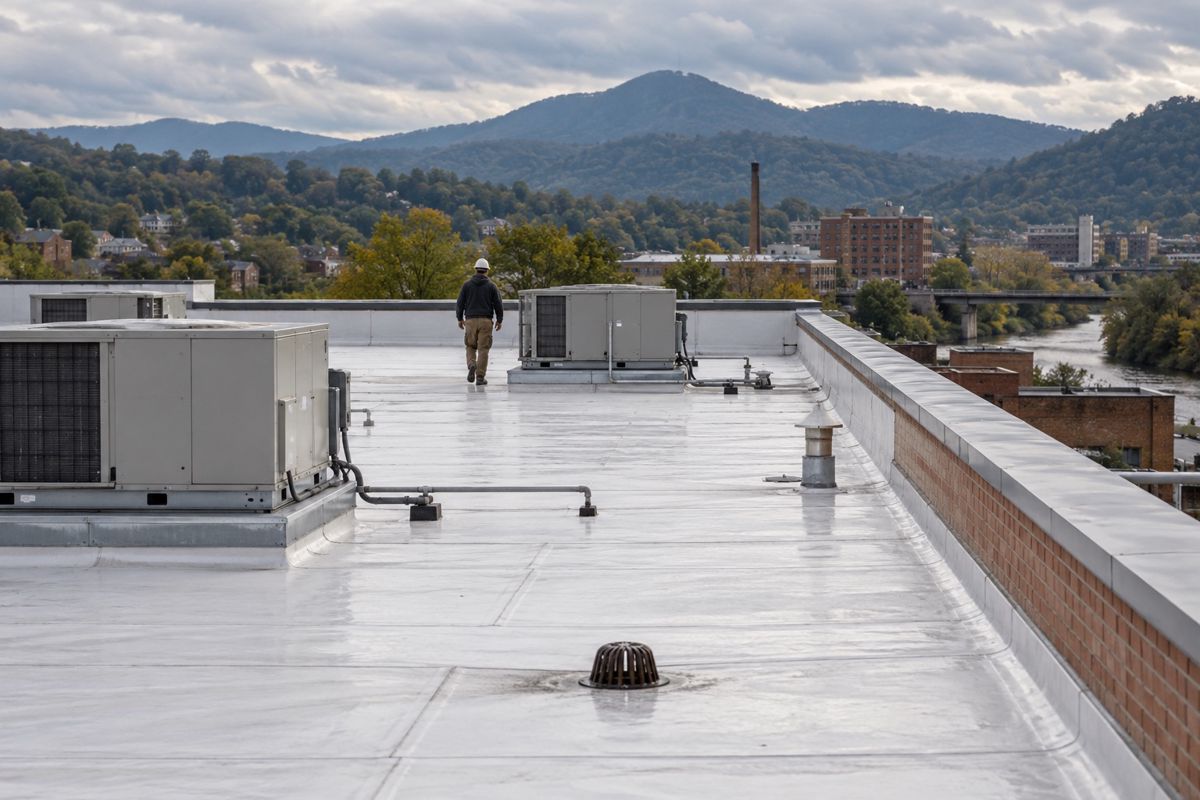
White flat membrane roof with rooftop units on a brick warehouse

Commercial roofing in Asheville, NC

Commercial roofing in Asheville for flat and low-slope buildings

Leaks, ponding water and aging membranes on shops, offices, apartments and warehouses, explained in plain terms.

  • Repair, coating and re-roof options compared
  • Work planned around tenants and customers
  • Written scope for budgeting

What types of commercial roofs are common in Asheville?

Commercial roofing Asheville property owners deal with covers a wide mix of buildings. Downtown has older brick buildings with flat roofs and parapet walls. The River Arts District has converted warehouses and studios. Shopping centers along the main commercial corridors, breweries, hotels, medical offices and apartment complexes add to the range.

Most low-slope roofs fall into a few systems.

  • TPO and PVC. Single-ply membranes in white or light colors, welded at the seams.
  • EPDM. A rubber membrane, often black, common on older and smaller buildings.
  • Modified bitumen and built-up roofs. Layered asphalt systems with a long record on flat roofs.
  • Metal panels. Standing seam or screw-down panels on warehouses, shops and some offices.

The right choice depends on the deck, the insulation, the budget and how the building is used.

What problems do flat and low-slope roofs have in this climate?

Flat roofs do not shed water as fast as pitched roofs, so small defects matter more. Asheville adds regular rain, summer thunderstorms and winter freeze and thaw cycles that stress membranes and seams.

Common problems include:

  • Ponding water. Standing water that remains a couple of days after rain, often from poor slope or blocked drains.
  • Failed seams and flashing. Edges, parapet walls, curbs and penetrations are the usual leak points.
  • Clogged drains and scuppers. Leaves from nearby trees block outlets and cause overflow.
  • Foot traffic damage. Service technicians for rooftop units can puncture or wear a membrane.
  • Wet insulation. A slow leak can soak the insulation layer, which lowers energy performance and shortens roof life.

For one-off leak problems, a repair may be enough. Widespread failure points toward re-roofing.

Should you repair, coat or replace a commercial roof?

There are three broad routes, and the honest choice depends on what is under the surface.

  • Repair. Fixing seams, flashing or punctures on a roof that is otherwise sound. It is the lowest cost, but only makes sense when most of the roof still has life in it.
  • Coating or restoration. A liquid-applied coating over a roof in fair condition and with dry insulation. It can extend service life, but it is not a fix for a roof with wet insulation or major damage.
  • Re-roof. A new system over the old one (recover) or after a tear-off. Tear-off lets crews check the deck and insulation and may be needed by code or by the membrane maker.

Moisture surveys and core samples can show whether a coating is worth considering. Ask who will stand behind the work and what any manufacturer warranty requires, such as approved installers and regular maintenance. Commercial work also often involves permits and plan review, so confirm requirements with the local authority.

Commercial roofing is priced by the building, not by a standard rate. The main factors are:

  • Roof area and shape. More area, more penetrations and more edge detail raise the cost.
  • System and materials. TPO, EPDM, modified bitumen and metal each have a different price and life span.
  • Tear-off or recover. Removing old layers adds labor and disposal.
  • Insulation and code upgrades. Energy codes can require added insulation when a roof is replaced.
  • Drainage changes. New drains, tapered insulation or scuppers add scope but fix ponding.
  • Access and logistics. Tight downtown sites may need cranes or hoists, and street closures may need approval.
  • Occupancy. Working over open businesses needs phasing, protection and safety planning.

Ask for an itemized proposal so you can compare bids on the same scope.

How long does a commercial roof job take, and when should you call?

A small repair can take hours. A re-roof on a larger building can take days or weeks, depending on size, system and weather. Work on occupied buildings is usually phased so customers, tenants and staff stay safe and the building stays dry at the end of each day.

Call when:

  • You see stains, drips or mold on ceilings or tiles.
  • Water ponds on the roof for days after rain.
  • A tenant or inspector reports leaks.
  • You are buying a building and need to know the roof condition.
  • You are planning a budget for the next few years and want an honest view of remaining life.

Regular checks, ideally in spring and fall and after major storms, catch small problems early. A roof inspection is a good starting point, and the home page lists our other services.

Clear communication
Free inspections
Written estimates
Local crew

Request commercial roofing

Tell us what you need and we call you back.

Step 1 of 3

What do you need?

No obligation.

Questions about roofing in Asheville

What is the best roof system for a flat commercial building?

There is no single answer. TPO and PVC are popular for reflectivity and welded seams, EPDM is a proven rubber membrane, and modified bitumen and built-up roofs suit some buildings well. The right system depends on the deck, insulation, budget, foot traffic and how long you plan to own the building.

How often should a commercial roof be inspected?

Many building owners schedule checks in spring and fall, plus after any major storm. Regular inspection finds failed seams, blocked drains and punctures before they cause interior damage. Keep the written reports, since they help with warranty requirements and with planning repair or replacement budgets.

Can a leaking commercial roof be coated instead of replaced?

Sometimes. A coating can extend the life of a roof that is in fair shape with dry insulation. If the insulation is wet or the membrane is badly deteriorated, coating covers the problem without solving it. A moisture survey and a close inspection help decide.

Can the roof be replaced while my business stays open?

Often, yes, with planning. Work is typically phased in sections, with safety protection over entrances, walkways and loading areas, and with the roof made watertight at the end of each day. Noise and dust still occur, so discuss hours and access with your contractor in advance.

Do commercial roofing projects need permits?

Often they do, and larger projects may need plan review and code compliance such as insulation levels and fire ratings. Requirements depend on the scope and the jurisdiction. Ask your contractor who handles the permit, and confirm the rules with the local building authority.

How it works

  1. Call or request a quote

    Tell us what is happening with the roof.

  2. Free inspection

    A roofer checks the roof and gives a written price.

  3. Work done right

    Clean crew, nail sweep, warranty in writing.

Ready when you are

Call now or request a quote online.

(828) 555-0159