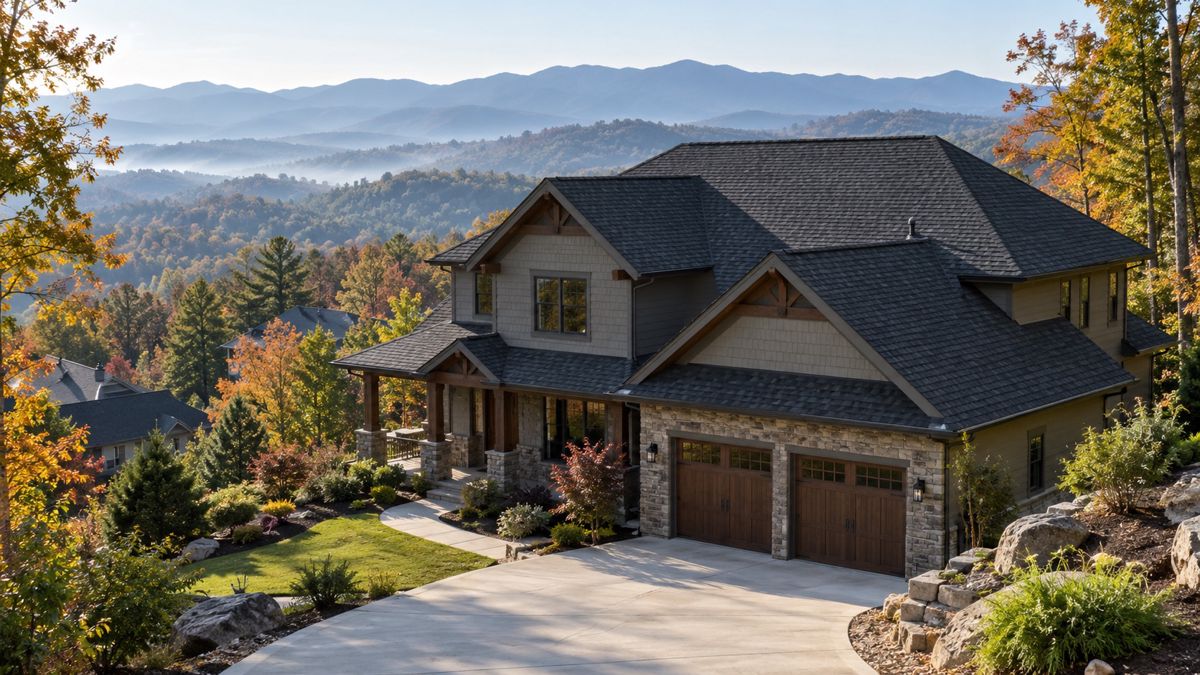
For a typical single-family home in Asheville, a new asphalt shingle roof often lands somewhere between about $9,000 and $20,000. Metal roofs usually cost more. Those figures are rough market guides, not quotes from this business, and the real number for your house depends on the points below.
Roofing prices have moved a lot in recent years, so treat any range as a starting point and get written quotes for your own roof.
What is a typical cost for a new roof in Asheville?
Broad market ranges for a full replacement on an ordinary house look like this. They are rough guides only.
- Asphalt architectural shingles: roughly $9,000 to $20,000 for many average-size homes.
- Standing seam metal: roughly $15,000 to $40,000 or more, depending on size and complexity.
- Cedar shake, slate or clay tile: often well above the other options and handled by specialist crews.
A small bungalow with a simple roof sits toward the low end. A large, steep home with many valleys and dormers sits toward the high end or beyond it. If a quote falls far outside these ranges, ask why.
What factors drive the price of a roof on Asheville homes?
Roofers price the job from the roof itself. These are the main drivers.
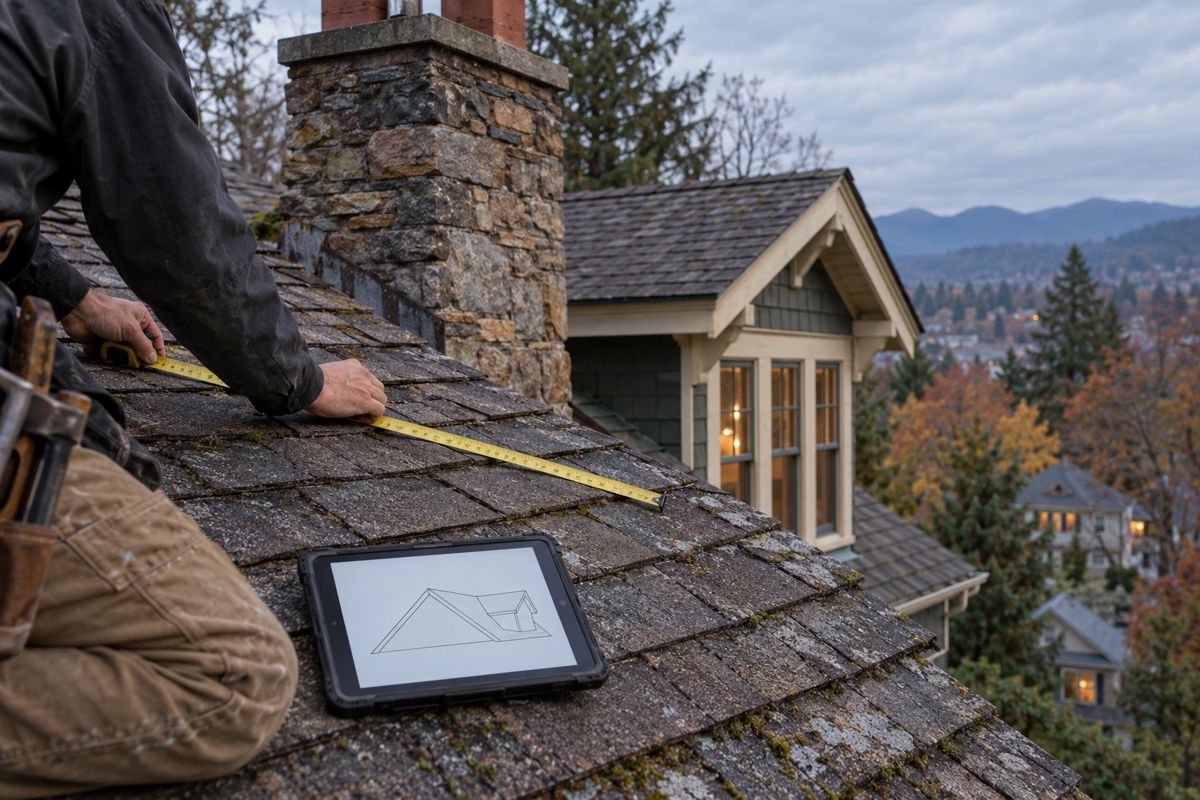
- Roof size. Measured in squares, which are 100 square feet each.
- Pitch. Steep roofs need extra safety equipment and slow the work.
- Complexity. Valleys, dormers, chimneys and skylights each add flashing and labor.
- Old layers. More layers to tear off means more labor and disposal.
- Deck condition. Rotted boards are replaced as the job goes, and this is a common source of change orders.
- Extras. New vents, gutters, skylights and chimney repairs.
Ask how rotted decking will be priced before work begins. A fair quote states a per-sheet or per-board rate or a clear allowance.
How does the material change the price?
Material is the single biggest choice after size.
Asphalt shingles
The most common roof on Asheville homes. Architectural shingles are thicker than older three-tab shingles and handle wind better. They are the usual starting point for budgets.
Standing seam metal
Popular on mountain houses and cabins because it sheds rain, leaves and snow quickly. It costs more up front and needs an installer who understands expansion, fasteners and flashing details.
Cedar, slate and tile
These suit certain historic and rustic homes, but they are heavier, more specialized and more expensive. Some also need regular upkeep in a damp climate.
Think about how long you plan to stay in the house. A longer-lasting material can make sense for a home you will keep for decades, while shingles are often fine for a shorter horizon.
Why can mountain homes cost more to roof?
Asheville roofing has some local twists that push costs up compared with a flat suburban lot.
- Steep lots and narrow drives. Placing a dumpster and delivering materials can take extra time and equipment.
- Complex rooflines. Victorian and Craftsman homes in areas like Montford, Biltmore Village and West Asheville often have many valleys, dormers and porches.
- Weather delays. Afternoon thunderstorms and cold mornings can interrupt work.
- Moisture and shade. Damp, shaded decking is more likely to need repair.
- Ice protection. Ice and water barrier along eaves and in valleys adds material cost but is worth it in a freeze-thaw climate.
- Tree work. Overhanging limbs sometimes need trimming first, which can be a separate cost.
Do you need a permit, and what about insurance?
Permit rules can apply to a roof replacement, and they differ between the City of Asheville and Buncombe County and by the type of job. Ask your roofer whether a permit is needed and who handles it, then confirm with the local permit office. If your house is in a local historic district, changes to roof materials may need design review, so ask before you choose a new material.
Insurance usually helps only when the damage comes from a covered event, such as wind, hail or a fallen tree. Age and ordinary wear are generally excluded. Read your policy and know your deductible. If you suspect storm damage, see our page on storm damage repair before you sign anything.
How can you compare roofing quotes fairly?
A cheap quote can be missing important items, and an expensive one may include extras you did not ask for. Compare like with like.
- Get at least two written quotes on the same scope.
- Check that each one names the materials, the underlayment, the flashing and the ventilation.
- Look for how decking repairs and unexpected problems are handled.
- Ask whether tear-off, cleanup and haul-away are included.
- Ask to see each contractor's license and proof of insurance, and verify them yourself.
- Read the payment terms. Be wary of a large deposit before any materials are delivered.
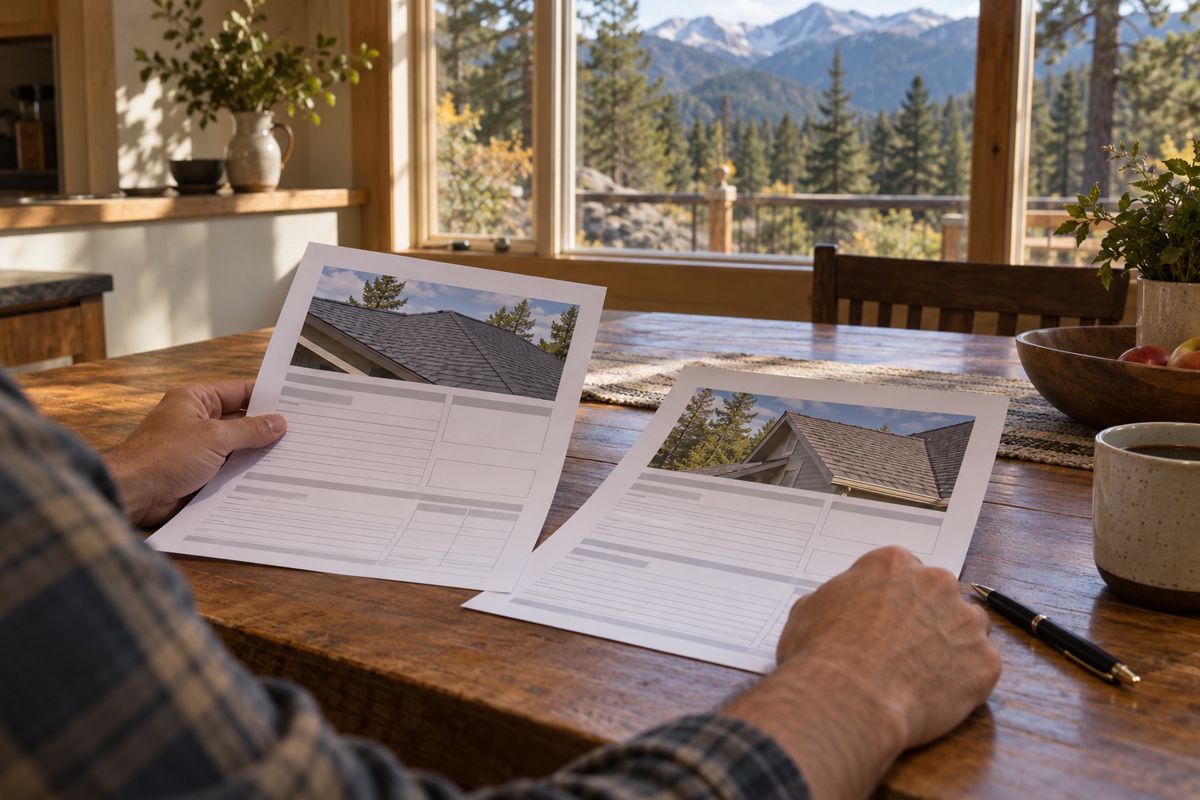
Take your time. A good roofer will be happy to explain each line of the quote.
It also helps to ask what happens if the crew finds a problem you could not see from the ground. The answer should be a clear process: stop, show you photos, explain the options and agree the extra cost in writing before continuing. Surprises are normal on older roofs. Unexplained surprises are not.
Finally, think about timing. Roofing demand tends to rise after big storms, and scheduling can stretch. Planning a replacement in a calmer period often gives you more choice of crews and dates, and more time to decide.
When should you start planning, and where to go next?
Start planning when the roof reaches the middle of its expected life, when leaks begin to appear in more than one spot, or after a storm that damaged a whole slope. Planning early lets you compare quotes calmly and choose a good time of year, rather than reacting to an emergency.
If you are unsure whether you need a new roof at all, start with a roof inspection to see what condition the roof is in. When it is time to move ahead, our roof replacement page explains how the work goes and what to ask. For a smaller issue, a repair may be the sensible first step.